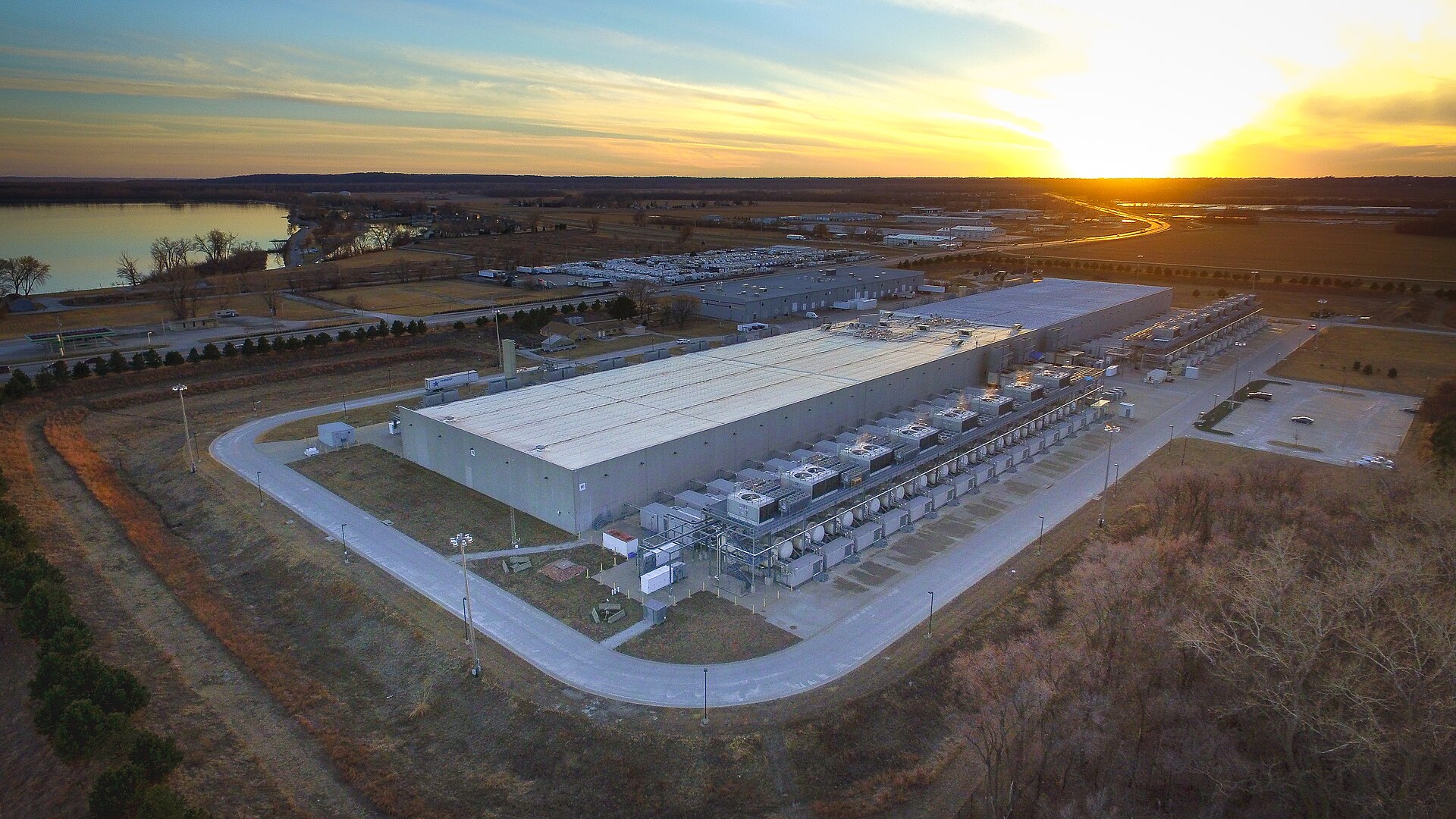
A Lowy Institute analysis circulating this week estimates that US AI data centers hold nearly 40 times the computing power of their Chinese counterparts, with AI accelerators alone accounting for roughly a 31-fold advantage. The figures are estimates, not audited counts, but the direction is consistent with export-control data and with the deployment schedules disclosed by hyperscalers.
The interesting part is not the ratio. It is the composition. Compute advantage in 2026 is a function of three things that are hard to separate: accelerator supply, advanced packaging capacity and available electricity.
Accelerators are the visible layer
Export controls have kept the most capable Nvidia parts out of the Chinese market, pushing domestic buyers toward Huawei’s Ascend line and a growing set of smaller alternatives. Software maturity remains the binding constraint there; porting large training workloads off CUDA is expensive even when the silicon is available.
Power and packaging are the hidden layers
US capacity has been built around utility-scale power contracts signed years in advance, often directly with nuclear or gas operators. Chinese data center build-out faces different constraints, including regional electricity allocation and a domestic HBM supply chain that is still scaling.
Advanced packaging may be the least discussed bottleneck. CoWoS and similar processes determine how many high-bandwidth memory stacks can be attached to a logic die, which in turn determines how many usable accelerators exist. Capacity there is concentrated in Taiwan and Korea.
What the ratio does not tell you
Raw compute does not map linearly to capability. Chinese labs have produced competitive open-weight models on constrained hardware, and algorithmic efficiency has improved faster than many forecasts assumed. A 40-fold gap in installed capacity is a serious strategic advantage, but it is not a guarantee of a 40-fold gap in results.
The more useful reading is about durability. Capacity that exists today was planned in 2023 and 2024. The 2028 picture will be set by packaging lines, power contracts and memory fabs being built right now.