
Robotics
Honor Is the Latest Phone Maker to Bet Its Future Includes Robots
The smartphone company has launched a robotics subsidiary, following a path Chinese consumer-electronics firms are increasingly treating as logical.
Independent reporting on the systems, capital and science shaping the technology industry.
The smartphone company has launched a robotics subsidiary, following a path Chinese consumer-electronics firms are increasingly treating as logical.

The updates give teachers more visibility into student AI use and tie Gemini's responses to OpenStax content in an effort to reduce hallucinated explanations.

Japan's state-backed foundry is struggling with transistor integration and yield, pushing its commercial start date toward 2029.

The Chinese lab's latest model matches proprietary reasoning performance on math and code benchmarks while shipping weights that anyone can run.
Reporting filed across every desk in the last few days.
The smartphone company has launched a robotics subsidiary, following a path Chinese consumer-electronics firms are increasingly treating as logical.

The six-year agreement puts OpenAI capacity on AMD Instinct accelerators, a small but deliberate step away from a single-vendor supply chain.
The updates give teachers more visibility into student AI use and tie Gemini's responses to OpenStax content in an effort to reduce hallucinated explanations.

Frontier architectures now allow software engineers to dial thinking tokens up or down depending on task complexity and budget limits.
The stories readers are moving through fastest today.
The six-year agreement puts OpenAI capacity on AMD Instinct accelerators, a small but deliberate step away from a single-vendor supply chain.
Frontier architectures now allow software engineers to dial thinking tokens up or down depending on task complexity and budget limits.
The Series C, led by Meritech with participation from Nvidia's VC arm, reflects a market treating agent observability as infrastructure.
A new language and compiler for the 900,000-core Wafer-Scale Engine tries to remove the specialist knowledge that has kept the platform niche.
DRAM and HBM allocations are tightening into 2027, and manufacturers are warning that capacity, not budget, will decide who ships hardware.
The system analyzes EEG data to flag indicators in children aged three to five, offering an earlier and more objective screening path.
Frontier foundation models, autonomous agents, neural architectures, and generative breakthroughs reshaping computing.
The six-year agreement puts OpenAI capacity on AMD Instinct accelerators, a small but deliberate step away from a single-vendor supply chain.
Frontier architectures now allow software engineers to dial thinking tokens up or down depending on task complexity and budget limits.

A new language and compiler for the 900,000-core Wafer-Scale Engine tries to remove the specialist knowledge that has kept the platform niche.

High-bandwidth unified memory architectures and 2-bit quantization kernels allow researchers to sever reliance on centralized cloud APIs.
Venture capital dealmaking, public market IPOs, fintech infrastructure, and technology macroeconomics.

The Series C, led by Meritech with participation from Nvidia's VC arm, reflects a market treating agent observability as infrastructure.

The German spin-out from the DLR research institute reached an $8.5 billion valuation as investors look past humanoids to factory-floor revenue.

The streak is the longest of 2025 and reflects a market where a handful of large rounds now define the weekly total.
How machine intelligence, edtech platforms, and digital tooling are transforming primary, secondary, and university education.
The updates give teachers more visibility into student AI use and tie Gemini's responses to OpenStax content in an effort to reduce hallucinated explanations.
Foundry fabrication, EUV lithography, chiplet packaging, custom hyperscaler silicon, and the global microchip supply chain.
Japan's state-backed foundry is struggling with transistor integration and yield, pushing its commercial start date toward 2029.
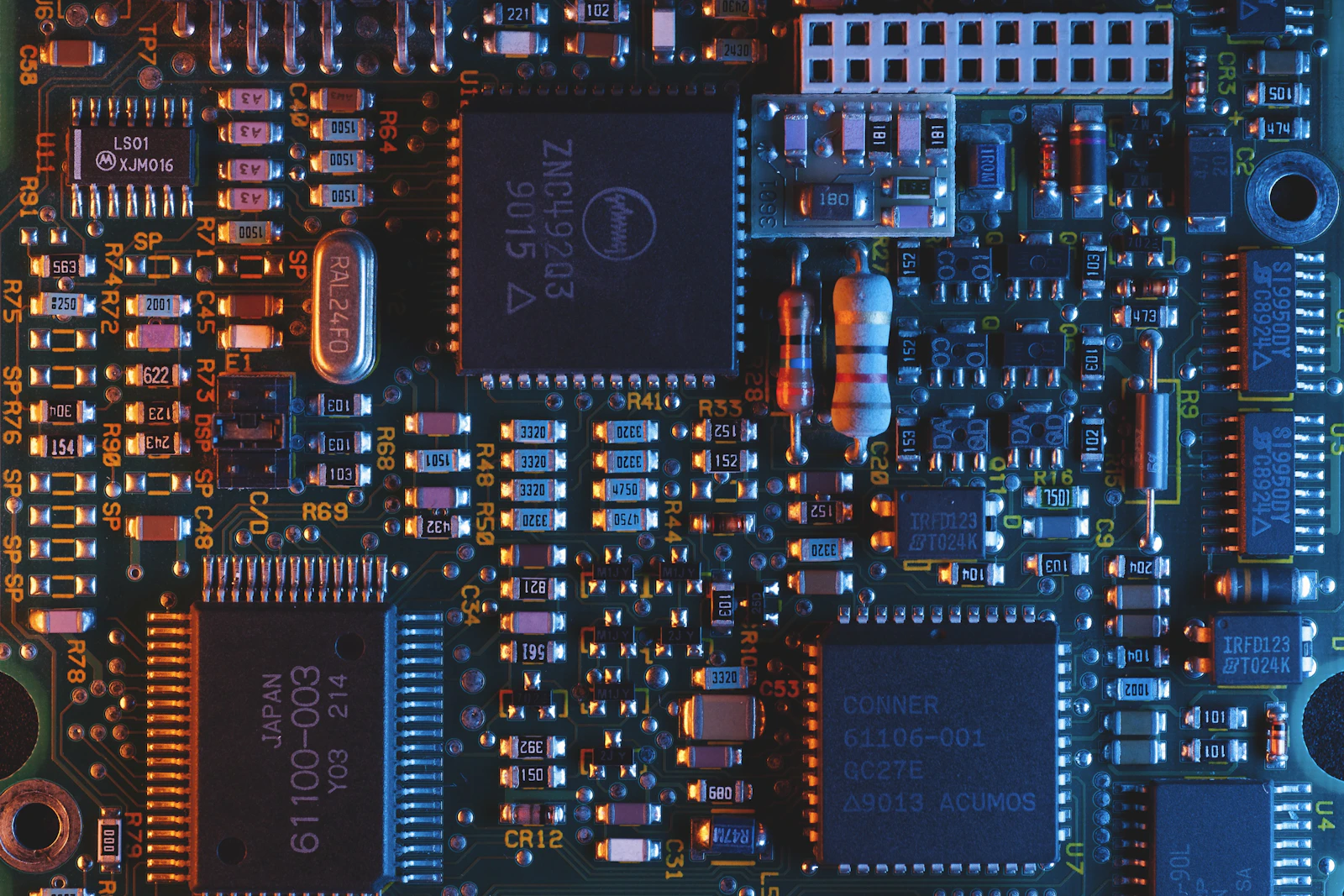
DRAM and HBM allocations are tightening into 2027, and manufacturers are warning that capacity, not budget, will decide who ships hardware.

Lithography capacity has become the pacing item in advanced memory production, and the queue is measured in quarters.

The UK chip startup is valued at roughly $7 billion after a Series C round, betting that agentic workloads reward a different architecture than training.
Humanoid manipulators, autonomous commercial vehicles, industrial warehouse automation, and physical world AI.
The smartphone company has launched a robotics subsidiary, following a path Chinese consumer-electronics firms are increasingly treating as logical.

The Shenzhen company's funding reflects growing demand for wearable industrial systems that augment workers rather than replace them.

Mobilint's acquisition of video IP firm Chips&Media is a bet that edge inference, not cloud connectivity, will define capable robots.
Computational drug discovery, robotic surgical suites, FDA-approved clinical AI models, and brain-computer interfaces.

The software flags previously undetected vascular findings in routine scans, a use case where AI augments radiologists rather than replacing reads.
Interviews and audio dispatches from the reporting team.
Our editorial team breaks down the newest autonomous agent benchmarks, TSMC's 2nm milestone, and the latest consumer device announcements.
We sit down with chief scientists building self-correcting code generators and agentic frameworks to separate fact from hyperbole.
Why early-stage valuations are stratifying, mega-funds are consolidating, and hardware startups are seeing a generational resurgence.
A comprehensive visual breakdown of ASML's 0.55 NA systems and how leading foundries are overcoming sub-2nm pattern fidelity challenges.
Additional reporting from across the newsroom.
The Shenzhen company's funding reflects growing demand for wearable industrial systems that augment workers rather than replace them.

The AI Leap initiative, built with OpenAI, has become a test case for what country-wide classroom deployment looks like in practice.
High-bandwidth unified memory architectures and 2-bit quantization kernels allow researchers to sever reliance on centralized cloud APIs.
DRAM and HBM allocations are tightening into 2027, and manufacturers are warning that capacity, not budget, will decide who ships hardware.

The system analyzes EEG data to flag indicators in children aged three to five, offering an earlier and more objective screening path.

A new estimate puts US AI data center capacity at roughly 40 times China's, a number that says as much about electricity and packaging as about chip design.
The German spin-out from the DLR research institute reached an $8.5 billion valuation as investors look past humanoids to factory-floor revenue.
The streak is the longest of 2025 and reflects a market where a handful of large rounds now define the weekly total.
Lithography capacity has become the pacing item in advanced memory production, and the queue is measured in quarters.