SoftBank has finalised the acquisition of the Robotics and AI Institute (RAI) from Hyundai Motor Group, bringing the Cambridge‑based research centre back under the umbrella of the Japanese conglomerate. The move follows a series of investments that have turned SoftBank into a notable owner of a wide range of robotics firms, and it arrives as the group’s proposed purchase of ABB Robotics faces regulatory headwinds.
Background to the deal
The transaction, announced by The Robot Report in September 2026, was completed without public disclosure of the purchase price. SoftBank declined to comment when approached for details. RAI was founded in 2022 by Boston Dynamics veteran Marc Raibert, who secured more than $400 million in start‑up capital from Hyundai. The institute’s creation marked Hyundai’s ambition to become a hub for advanced robotics research, a strategy that now appears to be winding down as the assets revert to SoftBank.
What the institute does
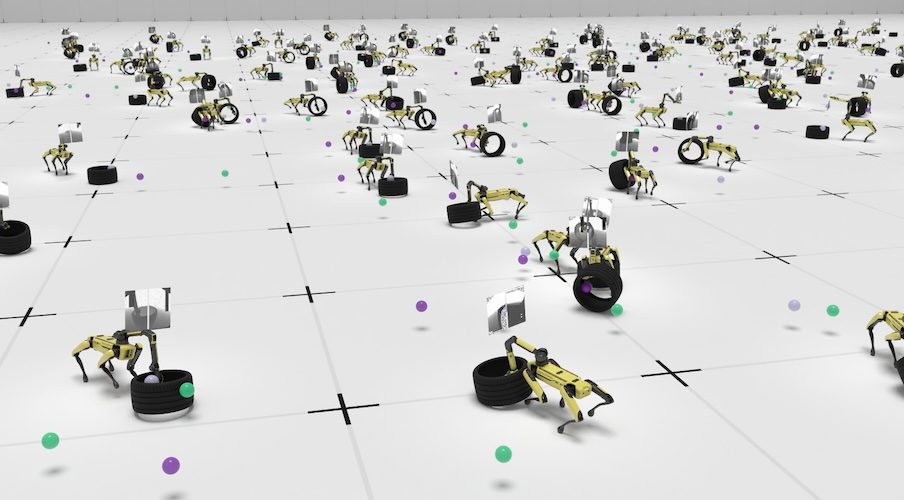
Based in Cambridge, Massachusetts, with a satellite office in Zurich, RAI concentrates on the fundamental problems that still limit autonomous machines – mobility across uneven terrain, dexterous manipulation, perception in cluttered environments and the integration of learning algorithms with real‑world hardware. The centre employs a mix of robot‑learning scientists, hardware engineers and simulation specialists, and it currently lists 24 open roles ranging from internships to senior research positions. Its work is characterised by a heavy reliance on high‑performance simulation, allowing new skills such as tire‑rolling to be taught to virtual robots in a few GPU‑hours before being transferred to physical platforms.
Potential synergies and strategic questions
SoftBank’s portfolio now includes a dozen robotics companies, from warehouse automation specialist Symbotic to AI‑driven manipulation start‑ups like Skild AI and Agile Robots. The acquisition raises the prospect of cross‑pollination between RAI’s research output and the commercial products of these firms. For example, advances in robot learning at RAI could accelerate the development of more adaptable pick‑and‑place solutions at Berkshire Grey, while simulation tools might be leveraged by AutoStore to optimise its storage systems. Yet it remains unclear whether SoftBank will allow RAI to operate independently or will steer its research agenda towards short‑term commercial goals.
Broader context for SoftBank’s robotics ambitions
The purchase comes at a delicate moment for SoftBank’s broader robotics strategy. The group’s planned $5.375 billion acquisition of ABB Robotics has been stalled after Chinese regulators blocked the deal’s Chinese component, casting doubt on the feasibility of that expansion. By contrast, the RAI acquisition is a relatively modest, cash‑free transaction that bolsters SoftBank’s intellectual capital without immediate financial exposure. It also restores a historic link with Marc Raibert, whose earlier tenure at Boston Dynamics helped shape the modern commercial robot market. How SoftBank balances research‑focused assets like RAI with its portfolio of revenue‑generating companies will be a key indicator of its long‑term vision for the sector.

